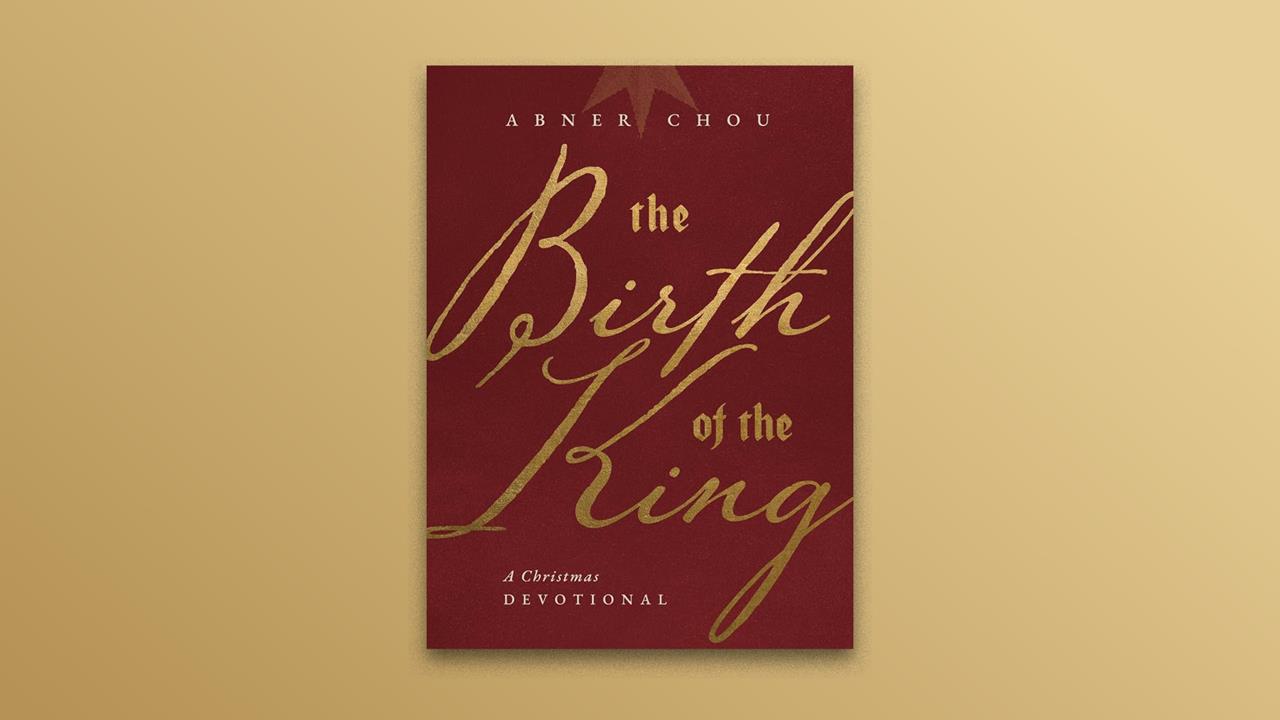
The Birth of the King
An interview with Dr. Abner Chou on his new Christmas devotional
What sets The Birth of the King apart from other Christmas devotionals?
Christmas is not just in the Gospels but throughout the entire Bible. It is prophesied and built up in the Old Testament with great hope and anticipation, and it is fulfilled in a majestic way in the New Testament. The Birth of the King focuses on Christmas in this entire flow of divine revelation. Such compounding context is important. We may know the stories and what happened, but we do not always know why certain moments took place or the significance of all the details. The Birth of the King does not just rehearse the history or celebrate the feelings we may have at Christmas but explains the theology that is unfolding in the coming of Christ. This devotional helps us to see Christmas the way God intended it.
How does understanding that anticipation in those early promises transform how a believer encounters the manger in Matthew?
It is often and rightly said that Christ had a perfect life. To be sure, Christ’s life was perfect because He is perfect, did no wrong, and only did what was absolutely right. But Christ had a perfect life for another reason. Every moment and detail of His life was perfectly designed. No detail of what He did was incidental. No place He went to was an accident. No occasion was ever random. God planned every aspect of Christ’s life so that every part of it was epic, culminating history and theology, and that began with Christ’s birth at Christmas. From the genealogies to His birthplace in Bethlehem to the prayers given to the people He met to those that were present, every component of the story is glorious, and the context of the Old Testament unveils that splendor. God ordained this moment from before the foundation of the world. He revealed and set history in motion to prepare for it since the beginning. And as we learn the Old Testament, we can perceive this moment to be as special as He intended it.
How can readers use the narratives of the incarnation to push back against the widespread fatigue and cynicism that often infiltrates the Christmas season?
Familiarity can breed contempt. Distraction is easy at this time of year, and with all the shopping, festivities, emotionalism, cooking, and decorating, it is easy to become tired and lose sight of what is actually meaningful and what makes the incarnation so special. That is a tragedy since Christmas is one of the greatest opportunities to consider the glory of Christ and what He has done for us. What can we do about this? In the busyness of the Christmas season, a great temptation is to read the Christmas story fast. But the key is to learn in those moments to read it slower and deeper, to break through our superficial understanding and see truths that were always there but we failed to notice and be convicted by truths we failed to contemplate as we should have. To do that takes both time and perhaps some guidance, and I pray that this devotional can help people take the time to contemplate The Birth of the King, and in seeing its wonder, recover the moment of Christ’s incarnation as a treasure.
How should looking back on the fulfillment of God’s promises in the birth of Christ give us hope and encouragement as we look to the future?
We may often think about Christmas as just a past event. But it is equally about the future. Gabriel announced that Christ will reign on the throne of David forever (Luke 1:32–33). Mary proclaimed that one day the corrupt will be toppled, God’s people will receive mercy, and God will remember His servant Israel (Luke 1:50–55). Zechariah announced that all God’s promises will be fulfilled and that all the elect will serve Him without fear (Luke 1:70–74). Simeon declared that Jesus is that salvation (Luke 2:30), and Anna expressed her joy over the redemption of Jerusalem (Luke 2:38). All of this looks forward to the time when Jesus returns and establishes His kingdom on earth, and all things are fulfilled and restored. Christmas anticipates that time of renewal, and it is even a window into it. The multitude of heaven that praised God saying, “Glory to God in the highest…” will have such worship to God in the end (Revelation 19:5). The shepherds who beheld the angels not only saw heaven but received a taste of what is to come. Christmas is so epic in part because it is the intersection of the past and the future, and the reality of Christmas is a reminder of the reality of our hope.
Available this Sunday for $9 at Grace Books and the Scholar’s Desk.
